Last updated October 30, 2026
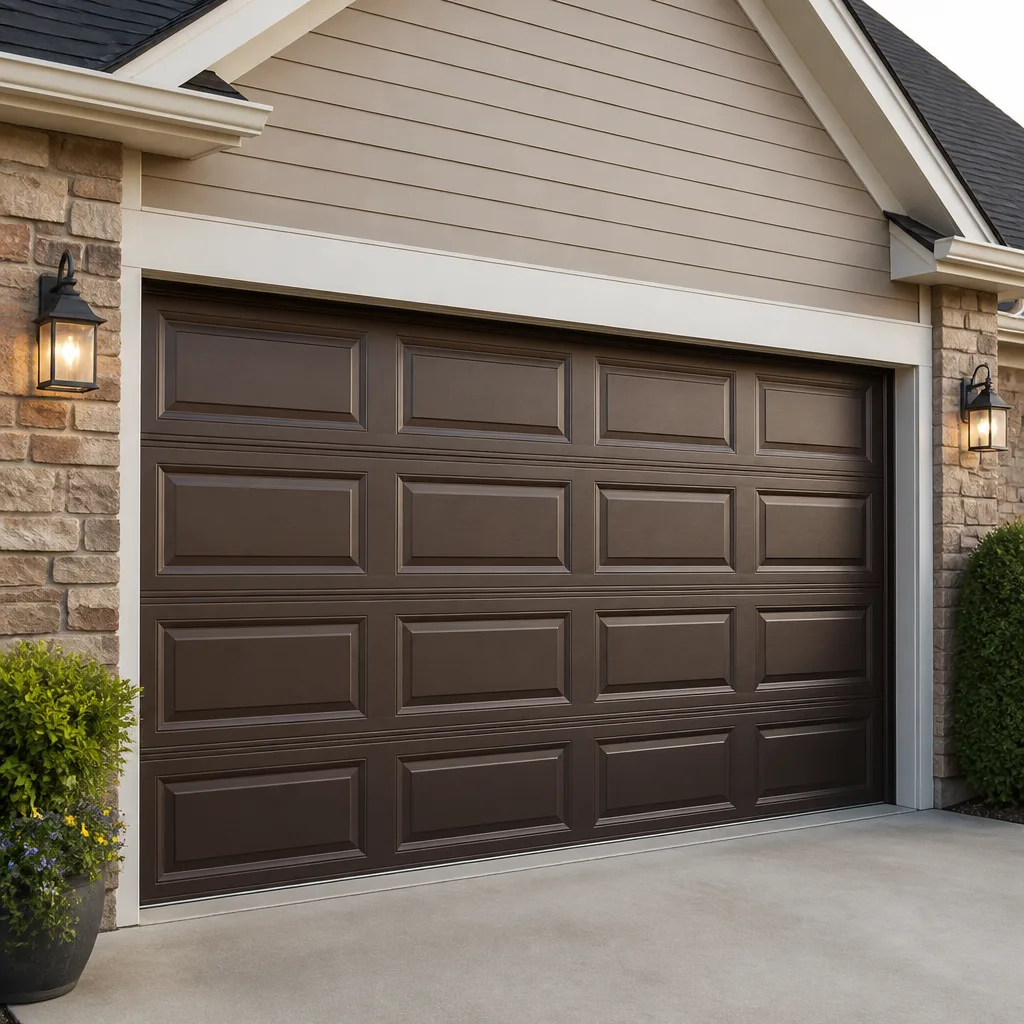 Raised-panel steel
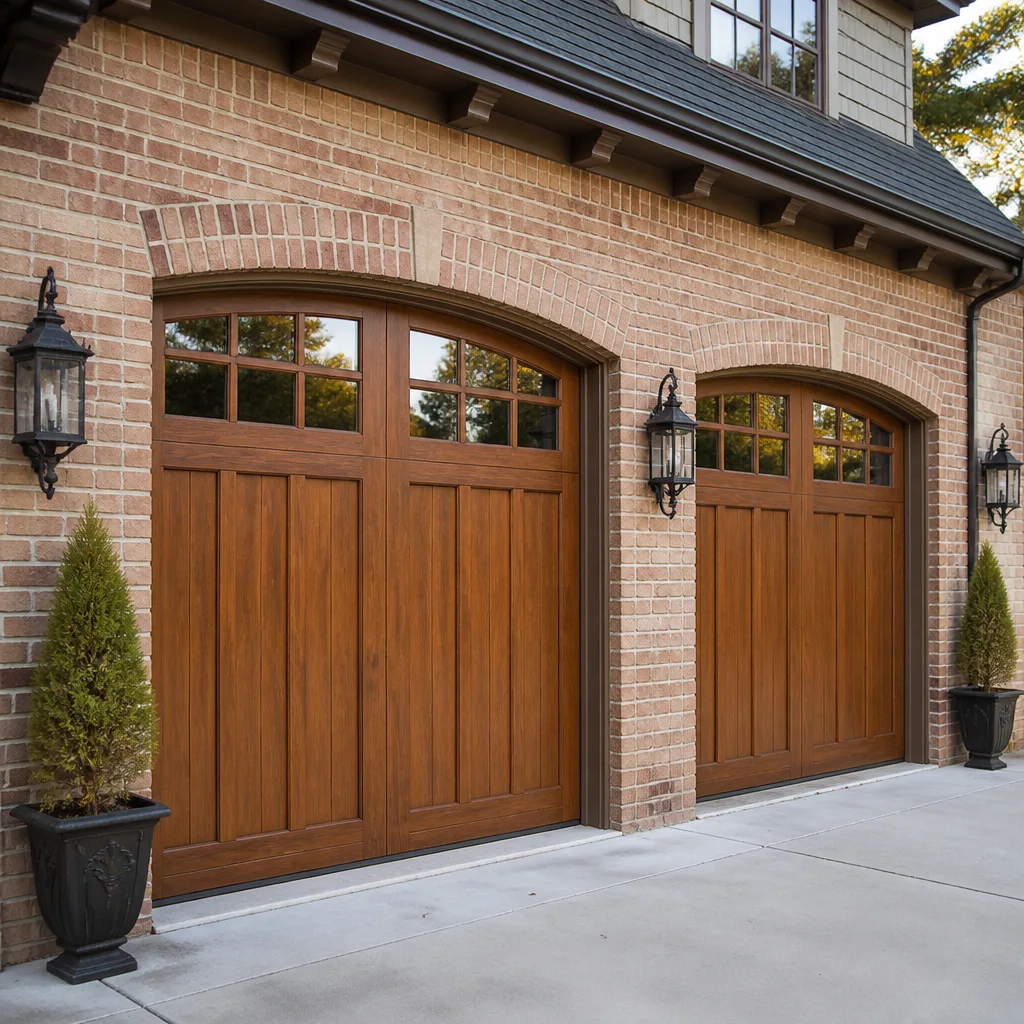 Carriage house
 Modern flush
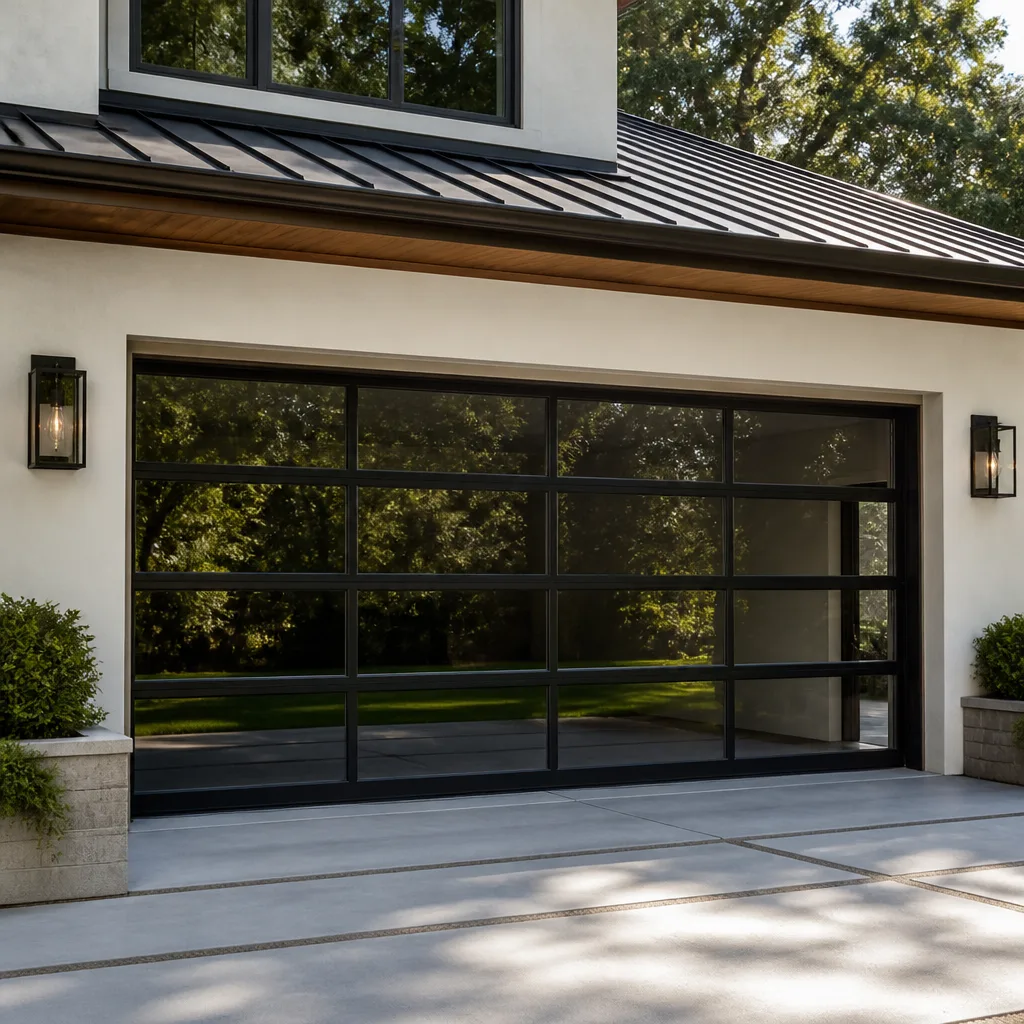 Full-view glass
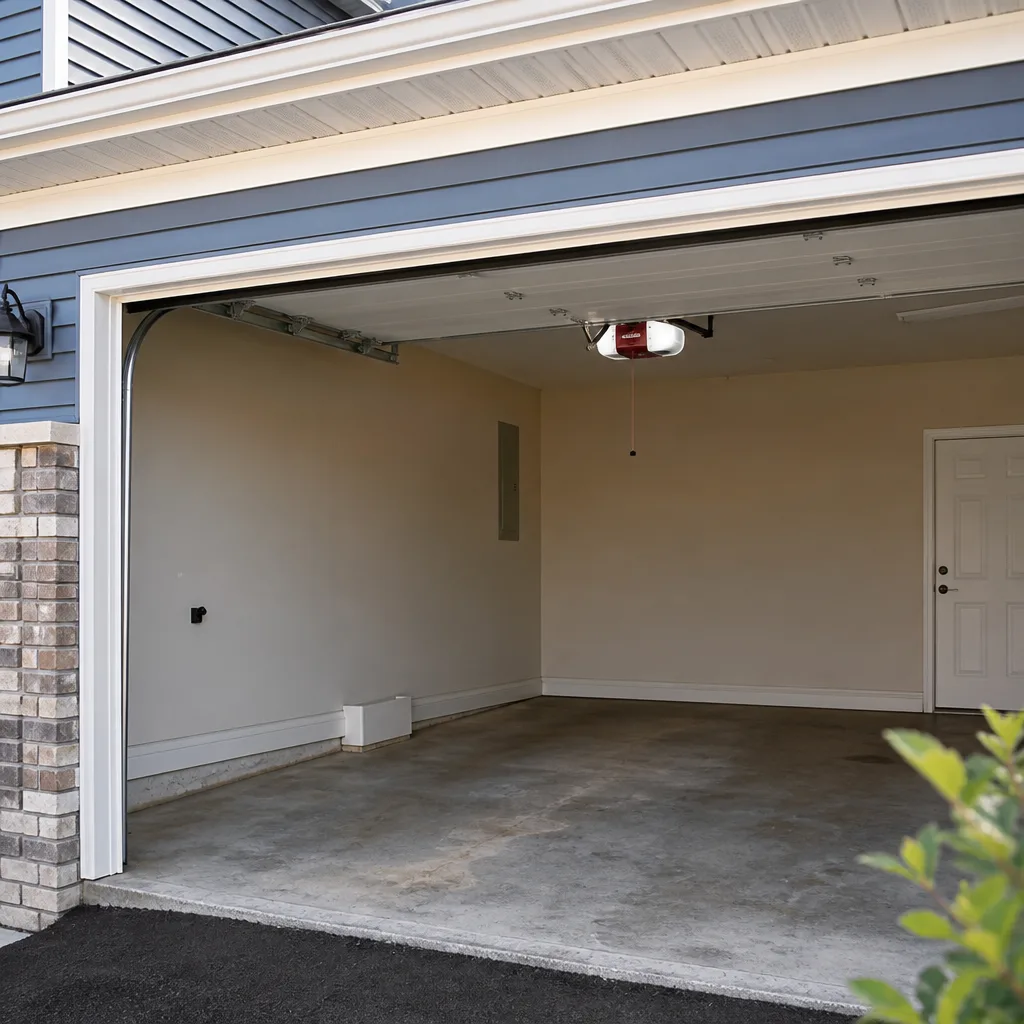 LiftMaster openers
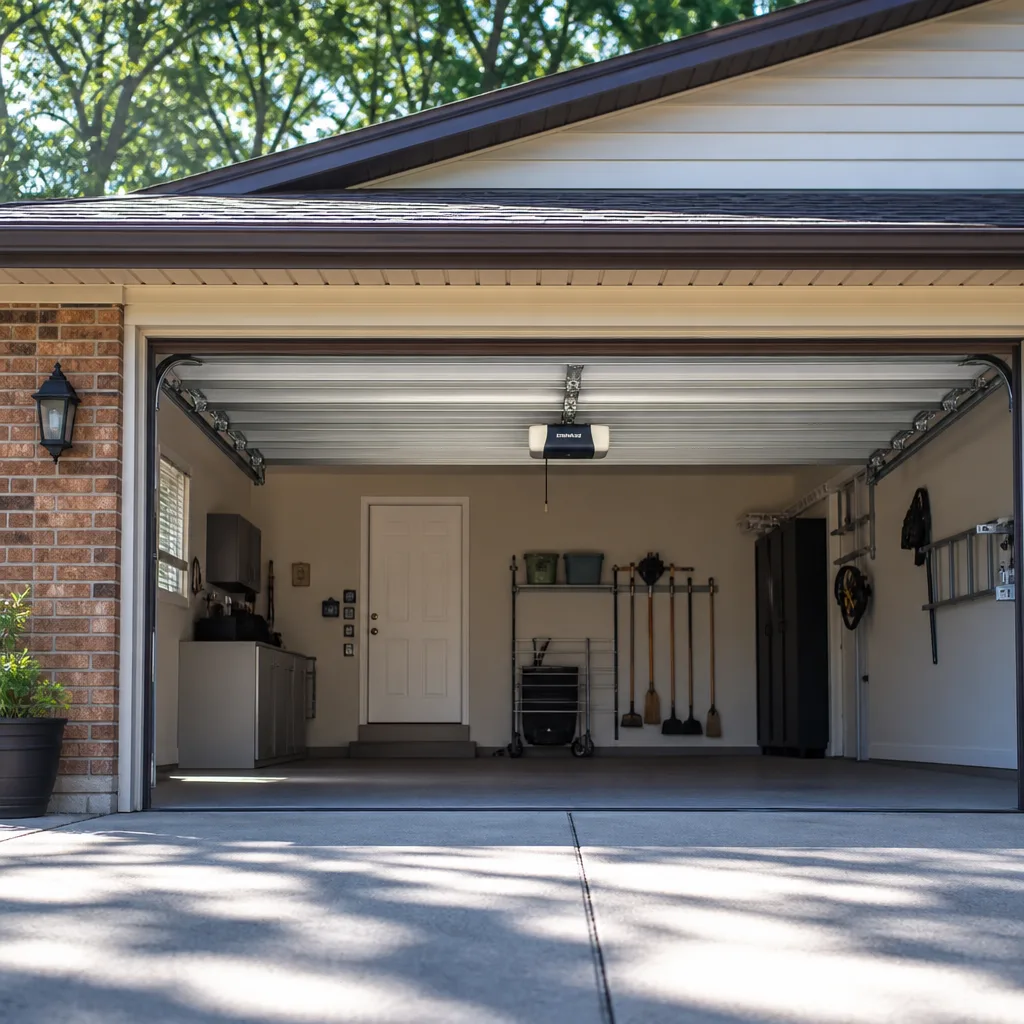 Chamberlain openers
Full 25-point door and opener safety check with every visit - springs, cables, rollers, tracks, and your LiftMaster or Chamberlain opener included
You get a price before we start. It does not change when the truck arrives.
Get your free estimateHow to Hire a Garage Door Contractor in Chula Vista: A Step-by-Step Guide
California’s Contractors State License Board lists 44 different license classifications, and most homeowners in Chula Vista have never heard of the one that matters for their garage door. The C-61/D-28 classification, which covers Doors, Gates & Activating Devices, is the legal minimum for garage door installation and structural repair work. Plenty of contractors without that specific ticket are still showing up in local search results with five stars and a polished website. This guide—along with The Complete Garage Door Repair Guide for Chula Vista Homeowners—walks you through the exact screening process that separates a licensed garage door specialist from a general handyman who quotes the same job, using Chula Vista’s specific code requirements and market conditions as the lens.
Quick Answer
To hire a garage door contractor in Chula Vista, verify their C-61/D-28 license on the CSLB website, confirm they carry specific brand experience for your door model, get a written quote with line-item pricing for labor and parts, check that they pull a permit when required, and read the contract for vague spring warranty language before signing. A dedicated garage door specialist, not a general handyman, should handle any work involving torsion springs, opener logic boards, or full door replacement. Call Hallmark Garage Door Repair home at (833) 467-4256 if you want this screening done for you.
Styles & brands we work with
Table of Contents
- Step 1: Verify the C-61/D-28 License on the CSLB Website
- Step 2: Separate a Garage Door Specialist from a General Handyman
- Step 3: Ask About Brand Authorization and Warranty Validity
- Step 4: Scrutinize the Quote for Missing Labor Line Items
- Step 5: Understand Chula Vista Permit Requirements
- Step 6: Read the Contract for Garage-Door-Specific Red Flags
- Step 7: Know the Difference Between Emergency Repair and Planned Replacement
Step 1: Verify the C-61/D-28 License on the CSLB Website
The first filter, before you even look at reviews or price, is license verification. The Contractors State License Board maintains a public database at cslb.ca.gov where you can search by contractor name, business name, or license number. A garage door installer should hold an active C-61/D-28 classification, sometimes listed under the broader C-61 with a D-28 sub-classification. This covers doors, gates, and activating devices, which is the legal ticket for garage door work in California. A general building contractor with a B license can technically do some door work, but a B-license holder is a generalist by definition. The C-61/D-28 means the contractor has passed a trade-specific exam. When you run the search, look for three things: the license status says “Active,” the expiration date is in the future, and there are no disciplinary actions listed in the history. An expired license, a suspended status, or a history of citations is an automatic pass. This step takes two minutes on your phone and eliminates the riskiest contractors before they ever set foot in your Chula Vista garage. The CSLB also lists the workers’ compensation insurance status, which matters because a garage door technician without coverage can leave you liable for injuries on your property. If the contractor seems hesitant to give you their license number before quoting, that hesitation is itself an answer.
Step 2: Separate a Garage Door Specialist from a General Handyman
Chula Vista has no shortage of handymen who list “garage door repair” alongside plumbing, painting, and fence work. That breadth is the problem. A torsion spring system holds tension measured in hundreds of pounds, and a technician who replaces one garage door spring every few months does not develop the diagnostic instinct of a specialist who handles several doors a week. In our experience, generalists misdiagnose garage door issues in predictable ways: they replace the opener motor when the real issue is a failing logic board, they swap out the bottom seal when the track alignment is causing the bind, and they torque springs by feel instead of by cycle count. A garage door specialist should be able to identify the manufacturer of your door and opener, describe the specific failure pattern of that model, and explain how the fix addresses the root cause rather than the symptom. Ask a screening question before you book: “What brands do you work on most often?” A specialist will name specific manufacturers. A generalist will say “all of them” without detail. At Hallmark Garage Door Repair in Chula Vista, we work across eight major brands including LiftMaster, Chamberlain, and Clopay, which means the technician who shows up already knows the hardware tolerances and common failure points of your specific door setup before they run a single diagnostic. That brand-specific familiarity translates directly into faster diagnosis and a repair that holds.
Step 3: Ask About Brand Authorization and Warranty Validity
Here’s a point most hiring guides miss entirely: the warranty on your garage door and opener can be voided by installation or repair work performed outside of the manufacturer’s dealer network. LiftMaster, Clopay, and Amarr all operate dealer tier structures. Authorized dealers get access to genuine parts, manufacturer technical support, and warranty-backed labor programs. Non-authorized contractors may be installing sourced parts of uncertain provenance, and when a warranty claim comes up later, the manufacturer may deny it because the work was not performed by an authorized channel. The question to ask is direct: “Are you an authorized dealer or installer for my door and opener brands?” If the contractor dodges, changes the subject to price, or says “we’re certified for everything” without naming a program, that’s a signal. A legitimate contractor will tell you exactly which brands they’re factory-familiar with and which dealer programs they participate in. For Raynor and Craftsman openers specifically, parts availability through non-authorized channels is inconsistent, and we’ve seen Chula Vista homeowners get stuck waiting weeks for a part that an authorized dealer could have sourced in two days. The brand authorization question is not just about warranty paperwork. It’s about whether the contractor has a direct line to manufacturer technical support when a diagnostic gets complicated, which happens more often than most homeowners expect on smart-enabled openers.
Step 4: Scrutinize the Quote for Missing Labor Line Items
Garage door quotes are where scope creep hides in Chula Vista. A two-line quote that reads “labor + parts, $450” is a red flag, not a deal. A legitimate garage door quote itemizes the work. For a spring replacement, you should see the spring model number or cycle rating, the labor line for spring balancing, and a separate line for any haul-away if old parts are being removed. For a full door replacement, the quote should break out the door model, track hardware, spring system, labor, and disposal. When line items are missing, the contractor has room to add surprise charges once the door is off the track and you’re committed. Here’s what a proper quote structure looks like:
- Parts: Specific model numbers for springs, cables, rollers, or opener units
- Labor: Broken down by task (spring balancing, track realignment, opener programming)
- Hardware and fasteners: Brackets, bearings, hinges, and any reinforcement material
- Disposal and haul-away: Old door sections, springs, and packaging
- Permit fees: If the job triggers Chula Vista’s permit requirement
- Sales tax: Calculated on parts, not lumped into a vague total
Ask the contractor to walk you through the quote line by line. If they can’t explain what each line covers, they either don’t understand the scope or they’re leaving gaps for add-ons later. A quote that omits spring balancing on a spring replacement is particularly suspicious because balancing is the labor-intensive part of that job. The springs themselves are not expensive. The skill of balancing them correctly is what you’re paying for. When comparing quotes across Chula Vista contractors, compare the line items, not just the bottom-line number. A lower total with fewer line items usually means more money out the door once the work is underway.
Step 5: Understand Chula Vista Permit Requirements
This is where garage door work gets legally specific, and it’s the step most contractors either skip or leave vague. In Chula Vista, full garage door replacement on an attached garage typically triggers a building permit requirement through the city’s Building Division. The permit ensures the door meets wind load standards for the region, which matters because Chula Vista sits in a high-wind zone. The city’s coastal exposure means a door rated for inland wind speeds may not pass inspection. A contractor who suggests skipping the permit to save time or money is creating a liability for you. Unpermitted work can surface during a home sale, when an inspector flags the door installation lack of documentation. It can also create an insurance problem if the door fails during a wind event and the insurer discovers the installation was never permitted. The right contractor handles permit applications as part of the job scope, or at minimum tells you clearly what the permit process involves and who files what. Be wary of any contractor who asks you to sign a document acknowledging that you’re requesting unpermitted work. That document exists to protect the contractor from liability while transferring all of it to you. For garage door opener replacement only, no permit is typically required in Chula Vista because the opener is considered an appliance, not a structural component. Spring and cable repair also fall outside the permit requirement in most cases. The distinction is structural change versus component service. A knowledgeable contractor should explain this distinction in plain language without hesitating.
Step 6: Read the Contract for Garage-Door-Specific Red Flags
The contract is where bad contractors hide things in plain sight. Most homeowners skim it, and that’s exactly what the bad actors are counting on. Negotiate these clauses and terms before signing anything.
- Vague spring warranty language: A contract that says “springs warranted” without specifying the duration, the cycle rating, or what constitutes a covered failure is not a warranty. High-quality torsion springs are rated by cycle count, typically 10,000 or 20,000 cycles. The contract should name the spring model and its cycle rating. If it doesn’t, you’re likely getting the cheapest spring on the market with a warranty that evaporates after a year.
- No model numbers on parts: The contract should list the exact make and model of every major part going onto your door. “New opener” is not a model number. “LiftMaster 87504-267” is. This protects you from paying for a premium unit and receiving an economy one, a substitution scheme that’s more common than homeowners realize.
- Same-day pressure tactics: A contractor who insists you sign today to lock in a price is using urgency to prevent you from getting a second opinion. Legitimate garage door work is not time-sensitive in a way that requires a same-day signature, except in a genuine emergency where your door is stuck open and your home is exposed. Even then, a reputable company will give you the price, let you think about it for an hour, and honor that price when you call back.
- Missing scope detail on the labor side: The contract should describe the work in enough detail that a third party could verify it was done. “Repair garage door” is not sufficient. “Replace two torsion springs with 0.225 wire, 26-inch length, 10,000-cycle rated units; balance system; test door operation” is. Ask for the detailed scope before signing.
- No payment schedule: The contract should state when payments are due. For smaller repairs, payment upon satisfactory completion is standard. For full door replacement, a deposit schedule with a final payment due after inspection is reasonable. Never pay the full amount upfront.
- Warranty exclusion for wind damage: In Chula Vista’s wind exposure, some contractors write in exclusions for wind-related damage that essentially nullify the warranty for the most common failure mode in the area. Read for this.
Step 7: Know the Difference Between Emergency Repair and Planned Replacement
The hiring process differs depending on whether your door just failed or you’re planning a replacement. A broken spring on a Saturday morning is an emergency. The door won’t open, your car is trapped inside, or worse, the door slammed down and you’re worried about repeat damage. In an emergency, the screening process compresses. You still verify the license, but you may skip the brand authorization deep-dive and the line-item quote negotiation. The priority is getting a licensed technician to your Chula Vista home the same day. In this scenario, we recommend calling a specialist directly rather than submitting a web form to a lead-generation service. Lead-generation platforms sell your information to multiple contractors, which means you’ll get calls from companies you never vetted. A direct call to a garage door specialist lets you verify the license on the CSLB site while the technician is en route. For planned replacement, the hiring process expands. Take the time to get multiple quotes, check brand authorization tiers, review the permit requirements, and read the contract in full. A planned Garage Door Installation in Chula Vista is a three to five thousand dollar project, not a three hundred dollar repair. The diligence should match the spend. Emergency repairs, by contrast, typically run in the low hundreds for spring or cable replacement, which changes the risk calculus. The common thread across both scenarios is the license check. It takes two minutes and it’s the single highest-signal filter you have.
Common Mistakes to Avoid
- Hiring based on a five-star Google rating alone. Ratings can be gamed, and an unlicensed contractor with fifty five-star reviews is still unlicensed. Run the CSLB check before you trust any review.
- Accepting a quote that lacks line items. A bottom-line number without a breakdown invites scope creep. In Chula Vista, where door pricing varies significantly by wind rating and insulation spec, the line items are where the real cost differences live.
- Skipping the permit question entirely. Chula Vista requires permits for full door replacement on attached garages. A contractor who never mentions permits is either unaware of local code or hoping you don’t ask.
- Confusing opener replacement with door replacement. These are different jobs with different scopes, different price points, and different permit requirements. Some contractors quote an opener replacement when the door itself is failing because the opener job is faster.
- Prioritizing price over brand authorization. A non-authorized installer may save you money upfront and cost you the manufacturer warranty, which for a premium door can be worth hundreds or thousands of dollars.
- Signing a contract without a detailed scope of work. Garland in garage door contracts is not your friend. If the work description is vague, the contractor has room to interpret the scope in their favor when a dispute arises.
- Ignoring the cycle rating on replacement springs. A 5,000-cycle spring lasts about three years under normal use. A 20,000-cycle spring lasts longer than many homeowners stay in the same house. The contract should name the rating.
See the difference
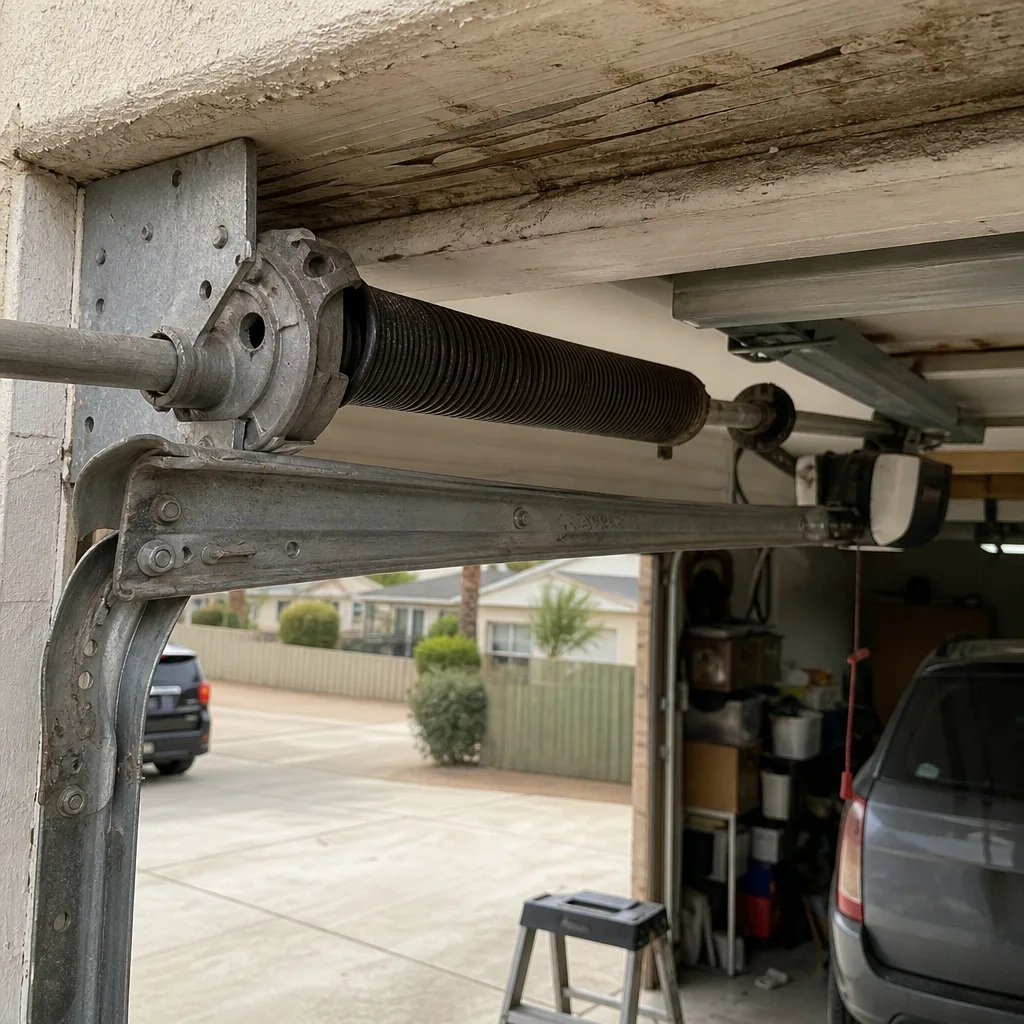 Before
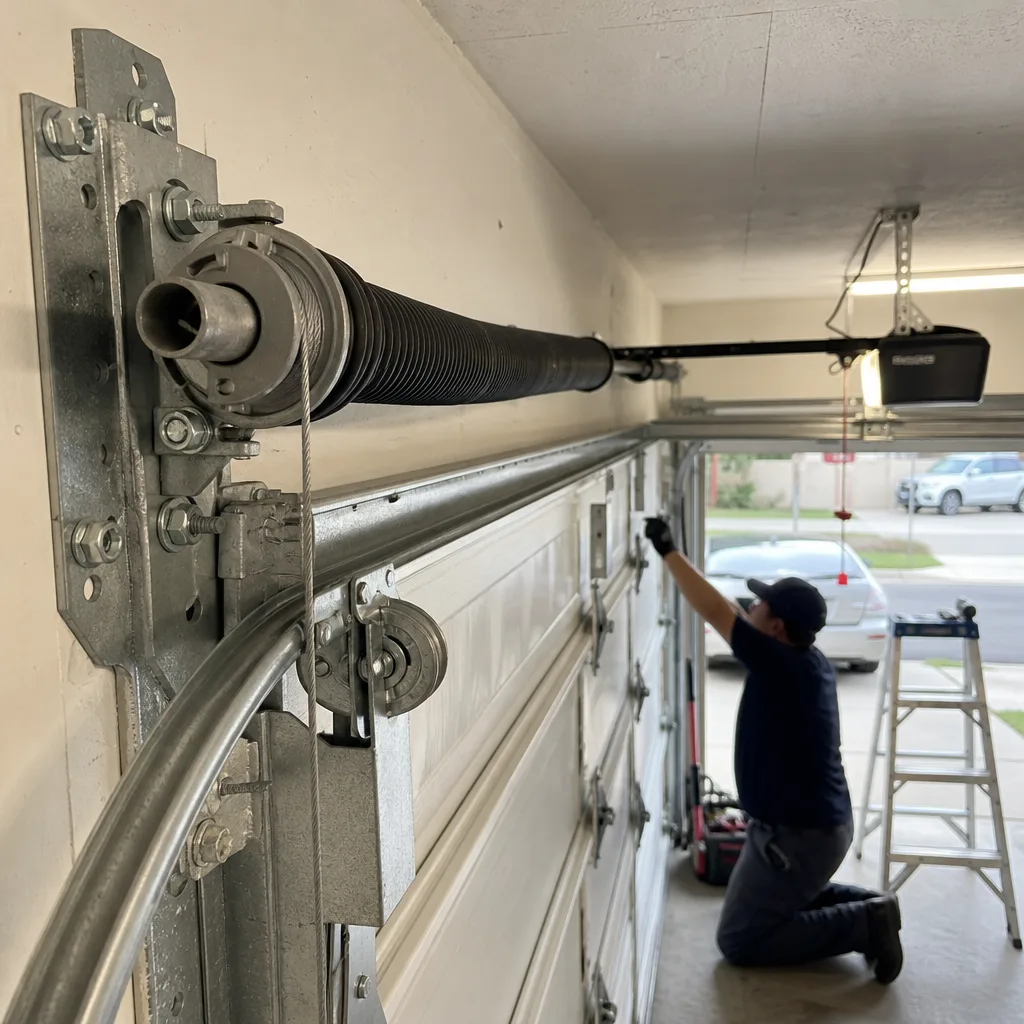 After
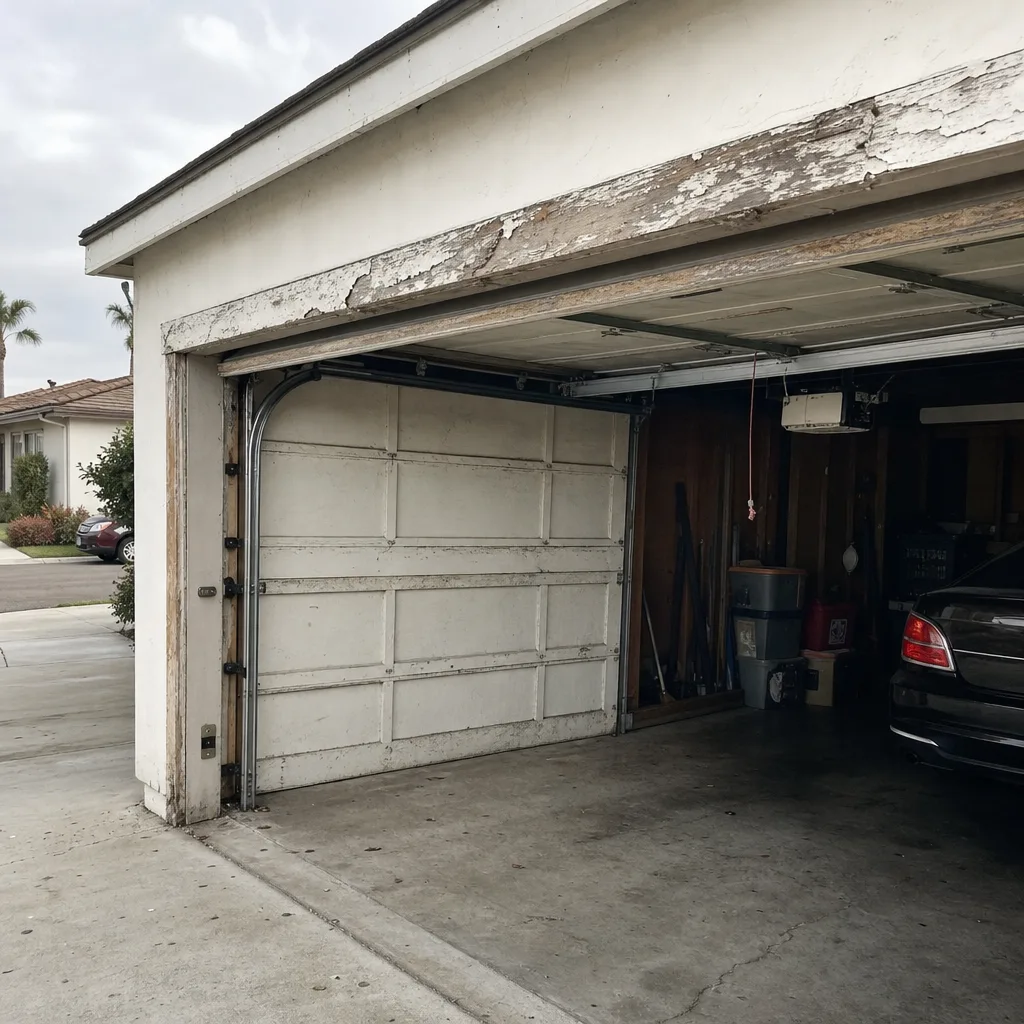 Before
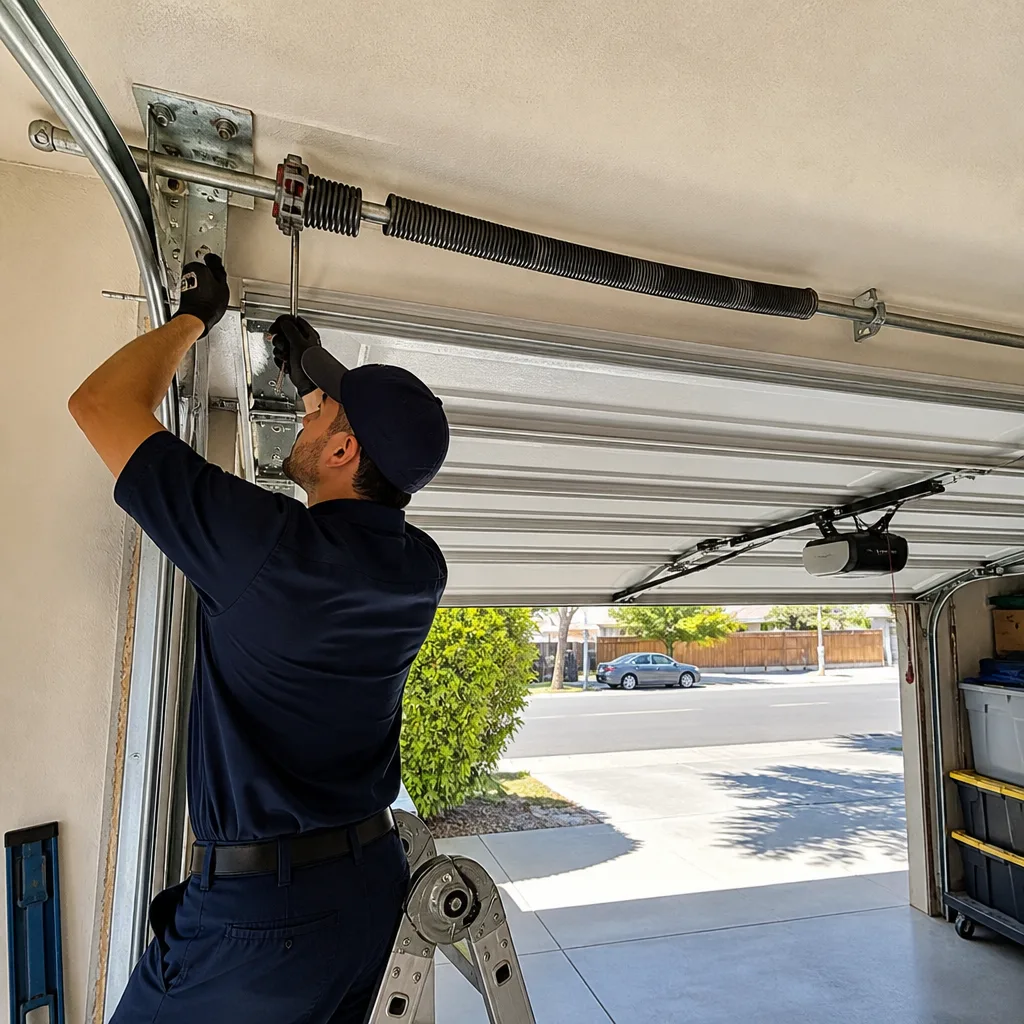 After
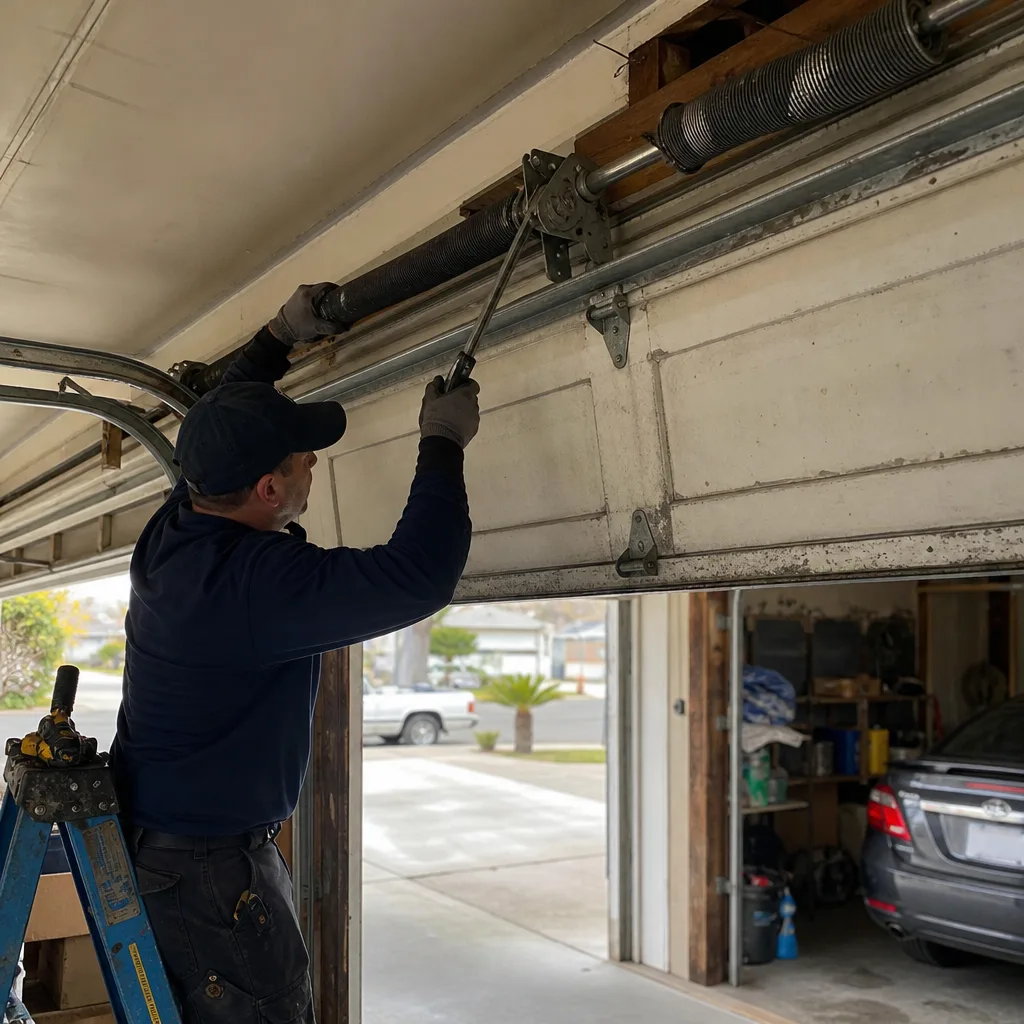 Before
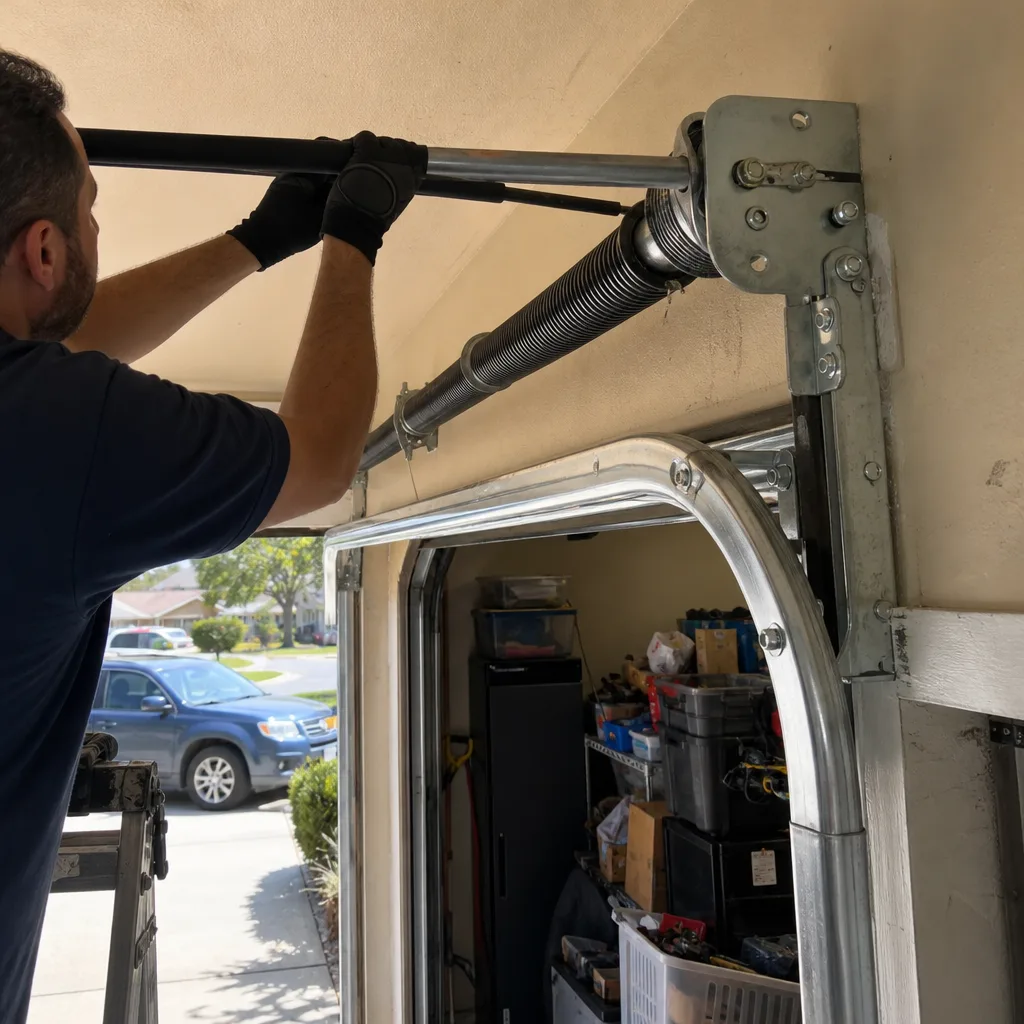 After
When to Call a Professional
Garage door torsion springs operate under extreme tension, and the cables that carry that tension can snap with enough force to cause serious injury. If your door has a broken spring, a snapped cable, a door off its track, or an opener that’s making grinding noises, do not attempt to fix these problems yourself. These are not weekend projects. The specific scenarios that require a professional include: any spring replacement (torsion or extension), any cable replacement, any track realignment that involves removing the door, any opener replacement that requires new wiring or logic board work, and any full door replacement that requires a permit. Hallmark Garage Door Repair offers free estimates in Chula Vista and can talk through what you’re seeing before you commit to anything. Call (833) 467-4256 and describe the symptoms. We’re factory-familiar with Chamberlain, Raynor, LiftMaster, and Craftsman systems, which means the phone conversation alone often narrows down the diagnosis. From opener to panel, we work on the door you have.
Frequently Asked Questions
A garage door contractor in California should hold a C-61/D-28 classification from the Contractors State License Board, which covers doors, gates, and activating devices. A general B license is not the same thing. Verify the license status on the CSLB website before hiring anyone. If you’d rather skip the research, call Hallmark at (833) 467-4256 and we’ll walk you through what our license covers.
Typical garage door repair in Chula Vista runs from $150 for a minor roller or hinge replacement to $450 for a spring replacement, with door replacement running from $1,800 to $5,000 depending on door size, material, and wind rating. These are local market ranges; your exact quote depends on your door model and the scope of work. Call (833) 467-4256 for a free estimate with line-item pricing.
Yes, Chula Vista requires a permit for full garage door replacement on attached garages due to wind load requirements specific to the coastal exposure zone. Opener replacement and spring or cable repair typically do not require a permit. A contractor who tries to skip the permit on a replacement is creating a liability for you.
In California, any contractor performing work over $500 in labor and materials must hold a CSLB license, and garage door spring replacement falls under the C-61/D-28 classification. A handyman without this classification is operating outside the law for spring work. Beyond legality, the safety concern is real. Torsion springs under tension are dangerous, and the technician needs to know what they’re doing.
Ask the contractor directly whether they’re an authorized dealer for LiftMaster, Chamberlain, or your specific brand, and ask for documentation. Authorized dealers can source genuine parts, access manufacturer technical support, and maintain warranty validity. Non-authorized installers may be working with aftermarket or reclaimed parts that void your warranty. We’re factory-familiar with both LiftMaster and Chamberlain systems, as well as Genie, Craftsman, Raynor, and the major door brands.
A reputable contractor quotes a price and sticks to it unless the scope of work genuinely changes after inspection. The price you’re quoted should be the price you pay, with any changes documented in writing before additional work begins. If a contractor consistently revises quotes upward after seeing the job, that’s a pattern of lowballing. Call Garage Door Opener Repair in Chula Vista at (833) 467-4256 and we’ll give you a price that holds. Our estimates are free and our pricing is upfront.
The Bottom Line
Hiring a garage door contractor in Chula Vista does not have to be a gamble. The screening process is simple: verify the C-61/D-28 license, confirm brand authorization, demand a line-item quote, understand the permit requirement, and read the contract for the specific red flags outlined above. These five steps filter out most of the risk before anyone shows up at your house. The contractor you want is the one who answers these questions directly and without deflection, who names the brands they work on, and who puts the details in writing. The contractor you want is a garage door specialist, not a generalist who happens to have a door on the schedule. For more guides & resources on keeping your system running right, visit our blog. Diagnosed right, fixed right, the Hallmark standard is what we hold ourselves to on every call. If you’re ready to skip the screening process and talk to a specialist who’s already passed it, call Hallmark Garage Door Repair at (833) 467-4256 for a free estimate.
Written by the team at Hallmark Garage Door Repair, serving Chula Vista since 2016.